St. Peter & St. Paul is the oldest church in Pickering, 900 years ago a Saxon church was built on this site, the only remains of that church is a carved cross shaft and the stone font now residing in the present Norman church which was built around 1140. Around 1200 the tower collapsed destroying part of the church, rebuilding took place and a massive tower was erected, it was completed in three stages over a period of 300 years. The church contains one of the most complete sets of medieval wall paintings in Britain, thought to have been commissioned in 1450 and painted over a period of ten years. 100 years later they were covered over with a thick coat of plaster during the Protestant Reformation, but were eventually rediscovered when the plaster was removed. Unfortunately one of the incumbent vicars decided they were a distraction from his sermons and full of "Popish superstitions" so he had them covered again with a thick coat of whitewash. The main reason for the paintings in Medieval times was as an aid to worship as the congregations were largely illiterate, the pictures helped them to understand the Bible stories. In 1876 the then vicar, Rev. G.H. Lightfoot, had the whitewash removed and the paintings were restored to their former splendour.
St. Christopher is the Patron Saint of Travellers
 , originally named Offero, he set off on a quest to serve the greatest king, he travelled the world, finally reaching a monastery where he wished to serve King Jesus but as he knew nothing of prayer he was given the job of carrying people across the river to the monastery. According to legend, one day he heard a child on the opposite bank crying, he took the child on his shoulder and carried him across, but was amazed to find the child heavier than anyone else he had ever carried. The child said "Your load is heavy because you are carrying someone who carries the sins of all the world." So thereafter Offero was known as Christopher - The Christ-bearer. On the right hand side of the second photo is the story of the beheading of St. John the Baptist and shows Salome dancing and Herod presenting her with John the Baptists head on a plate.
 The right hand side of the third photo shows scenes from two martydoms. the first one on the bottom is of St. Edmund born in 840 who at age 14 became the Christian King of East Anglia. The Vikings invaded in 869, marching through Mercia and into East Anglia, destroying the abbeys of Peterborough and Ely on their way. Edmund fought them at Hoxne on the Waveney and the Danish leader offered to set Edmund up as a 'puppet king' if he would renounce Christianity. Edmund refused. On November 20th 870, they stripped him naked, tied him to a tree and shot him with arrows. The scene above that is of the murder of St. Thomas Becket, appointed Archbishop of Canterbury in 1162 by his friend King Henry II. Henry wanted to bring the church under state control but Thomas refused to co-operate. Henry was furious and in a burst of temper was heard to say "Will no-one rid me of this turbulent priest." Four knights who overheard took him at his word and murdered Thomas in the cathedral of Canterbury. Pope Alexander III declared Becket a saint, and his shrine in Canterbury became a most hallowed place in England.
 right hand side of the third photo shows scenes from two martydoms. the first one on the bottom is of St. Edmund born in 840 who at age 14 became the Christian King of East Anglia. The Vikings invaded in 869, marching through Mercia and into East Anglia, destroying the abbeys of Peterborough and Ely on their way. Edmund fought them at Hoxne on the Waveney and the Danish leader offered to set Edmund up as a 'puppet king' if he would renounce Christianity. Edmund refused. On November 20th 870, they stripped him naked, tied him to a tree and shot him with arrows. The scene above that is of the murder of St. Thomas Becket, appointed Archbishop of Canterbury in 1162 by his friend King Henry II. Henry wanted to bring the church under state control but Thomas refused to co-operate. Henry was furious and in a burst of temper was heard to say "Will no-one rid me of this turbulent priest." Four knights who overheard took him at his word and murdered Thomas in the cathedral of Canterbury. Pope Alexander III declared Becket a saint, and his shrine in Canterbury became a most hallowed place in England.
 |
| The Chancel & Sanctuary |
 |
| Stone Saxon Font |
 |
| Close-up of Effigy of Sir William Bruce |
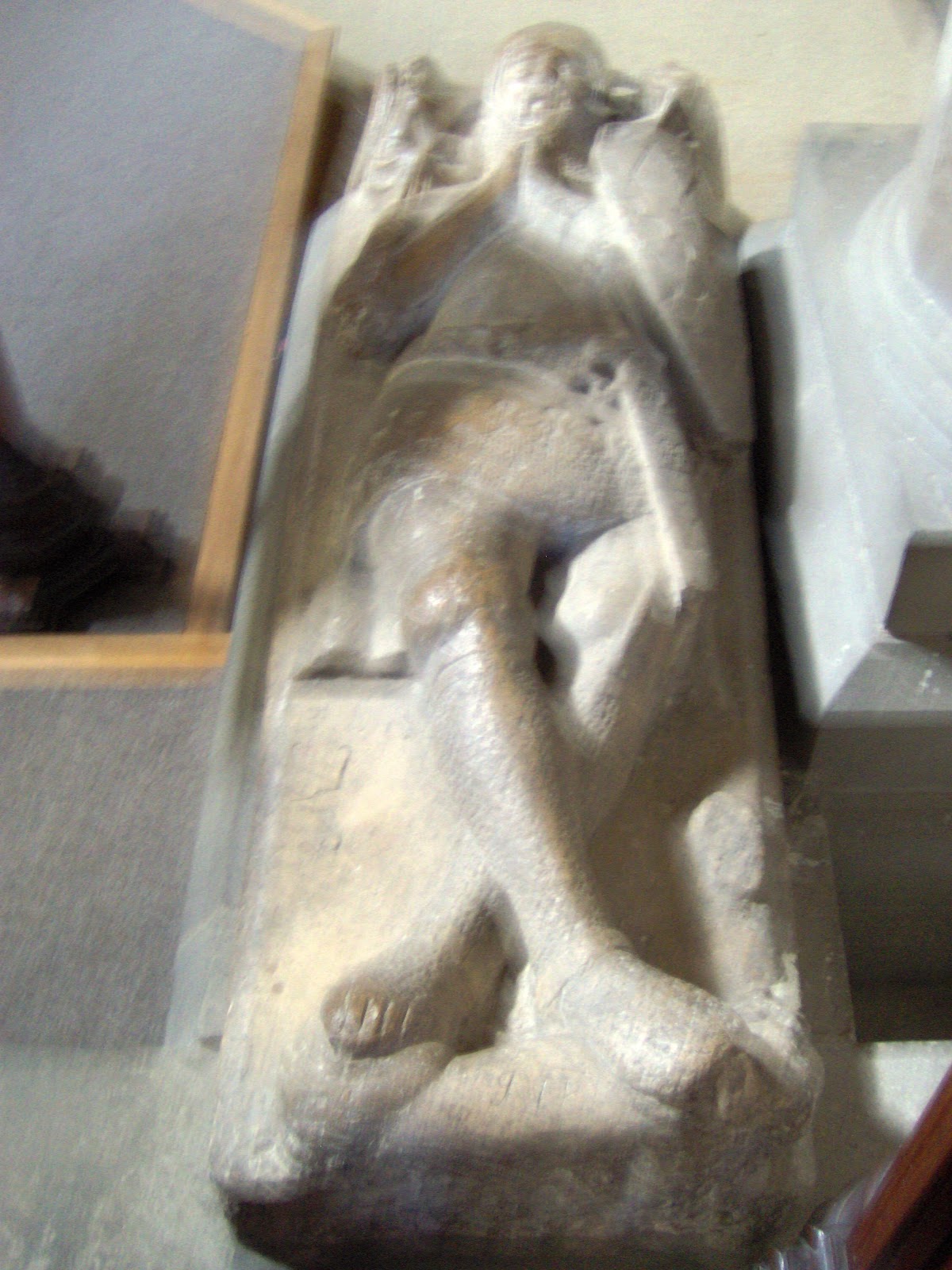 |
| Effigy of Sir William Bruce |
Next week I will show photo's of the paintings on the South Aisle wall along with other items of interest in this beautiful and well used Parish church.
Also the reason why an American flag is on display in the Sanctuary.
For more photo's from around Our World

visit: http://ourworldtuesdaymeme.blogspot.com/